- Todos los productos
- Membranas PCTE (Policarbonato)
- Filtro de membrana de policarbonato hidrofóbico
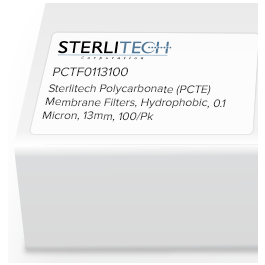
Filtro de membrana de policarbonato hidrofóbico
 https://www.cotecno.cl/shop/filtro-de-membrana-de-policarbonato-hidrofobico-629460
https://www.cotecno.cl/web/image/product.template/629460/image_1920?unique=5b1b658
https://www.cotecno.cl/shop/filtro-de-membrana-de-policarbonato-hidrofobico-629460
https://www.cotecno.cl/web/image/product.template/629460/image_1920?unique=5b1b658
Descripción general
Hydrophobic Polycarbonate Filtro de membrana
Our hydrophobic PCTE membranes are produced from a two-step, quality-assured, proprietary manufacturing process delivering consistent products with pore uniformity, predictable flow rates, and trusted particle retention levels. A single microporous polycarbonate film is used to produce the membranes with a thin translucent structure and glass-like surface characteristic that enable superior particle visibility and easy microscopic analysis. Their pores are absolute-rated, precisely cylindrical, and narrowly distributed, allowing their surfaces to capture 100% of particles larger than the stated pore size. These membranes are also available in a hydrophilic, PVP-coated, option for applications involving aqueous and alcoholic samples.
*Hydrophobic PCTE has a nominal water-contact angle of 78-88° as tested, which tends to be neutral on a hydrophilic/hydrophobic scale; most hydrophilic contact angles are less than 50°, and hydrophobic contact angles are greater than 120°. Hydrophilic PCTE is treated with PVP to greatly improve wettability, making them better suited for use in aqueous environments. Hydrophobic PCTE filters here are denoted to better identify their performance differences from those treated with PVP.
Características principales
- We provide the filters and technical support to help you take your breakthrough product from an idea to a prototype, to commercial scale.
Preguntas frecuentes
The pores of microporous membrane filters act as small capillaries. When hydrophilic membranes come into contact with water, capillary action associated with surface tension forces causes the water to spontaneously enter and fill the pores. In this manner, the membranes are easily wetted and allow the bulk flow of water through the pores. Once wetted, hydrophilic membranes will not allow the bulk flow of air or other gasses, unless they are applied at pressures greater than the membrane’s bubble point.
Hydrophilic membrane filters are typically used with water and aqueous solutions. They can also be used with compatible non-aqueous fluids. Hydrophilic membrane filters are typically not used for air, gas or vent filtration since the filters would block flow if inadvertently wetted, by condensation for example.
When hydrophobic membranes come into contact with water, surface tension forces act to repel the water from the pores. Water will not enter the pores and the membranes will act as a barrier to water flow, unless the water is applied at pressures greater than the membrane’s water entry pressure. Low surface tension fluids, such as alcohols, can spontaneously enter and fill the pores of hydrophobic membranes. Once all the air in the pores is displaced, there are no longer any surface tension forces and water can easily enter the pores, displace the low surface tension fluid, and pass through the membrane. The membrane will then allow bulk flow of water for as long as the pore remain water filled. If the membrane is allowed to dry (i.e. air enters the pores), then it must be pre-wet with a low surface tension fluid again prior to use with water.
Hydrophobic membrane filters are typically used with compatible non-aqueous fluids. They are also commonly used as air, gas, or vent filters. Hydrophobic membrane filters are sometimes used with water or aqueous solutions; and, in these applications, they must first be prewet with a low surface tension, water miscible fluid prior to use.
Q. What is a Polycarbonate or Polyester Track Etch filter membrane?
A. These types of filter membranes are precise, two-dimensional micro porous screens with straight through, cylindrical pores.
As in the case of other screen-type filters, particle capture takes place only on the surface, therefore there is more accurate separation cut-off. The precision cylindrical pores of Track Etch membranes have the most accurate size cut-off of any membrane. In depth filters, particles get caught throughout the torturous paths within the matrix as well as on the surface of the membrane.
Track Etch filters are also very thin (between 6 - 15 microns thick) but very durable (can withstand over 3,000 psi when properly supported). They range in color from opaque to almost transparent and black.
Q. What are the benefits of using Sterlitech Polycarbonate or Polyester filter membranes?
A. Sterlitech Polycarbonate Track Etch (PCTE) and Polyester Track Etch (PETE) filters offer the lowest, non-specific binding of any filter membrane. The capture of samples occurs on a flat, glass-like smooth surface with an even distribution of particles captured on a single plane, simplifying microscopic and SEM examination of samples captured on the surface of the membrane.
- Sterlitech Track Etch filter membranes are manufactured and produced under class 100 condition during critical manufacturing steps. Therefore, the membrane is free of contaminants and pyrogens.
- Sterlitech PCTE and PETE membranes offer very low extractables. Both PCTE and PETE membranes are integral, plastic films, therefore, there is no sloughing or particle shedding.
- Sterlitech PCTE and PETE membranes are biologically inert.
- Both filter membranes offer excellent chemical resistance and thermal stability, with PETE offering a higher chemical resistance.
Q. Will Sterlitech Track Etch filter membranes keep liquid behind the filter and let gases pass through?
A. PVP-Free Polycarbonate membranes have a water contact angle of approximately 90° and will not spontaneously wet out with liquids that have a surface tension equivalent to or greater than water (1 dyne). Due to the low water contact angle, polycarbonate membranes do not make effective vent filters. Low differential pressures will allow liquid water to break through the pores. We recommend membranes with a higher water entry pressure such as Hydrophobic PTFE, Hydrophobic Polyethylene, and Oleophobic Polyester for venting applications. Effective vent filters will allow permeation of gasses, while blocking liquid from entering the pores. Water vapor and other gases will pass through a hydrophobic vent membrane.
Q. Can Polycarbonate membrane be bonded with adhesives?
A. Polycarbonate membranes can be adhesive bonded to each other or to other plastics, metals, glass or wood using commercially available one component, two component and pressure adhesives.
Depending on the cell line, most exfoliated human cells adhere with some tenacity. Most epithelial cells will adhere if the membrane has a negative charge applied by gas plasma or has a suitable attractant applied to the surface of the membrane. Endothelial cells will generally not attach to the surface of Track Etch membranes.
There is a visually apparent difference between the sides of some of the PCTE Filtros de membrana. This is a result of the process used to manufacture the polycarbonate base film. One side of the film has a very smooth surface resulting in a shiny appearance. The other side has an inherent surface texture resulting in a dull or matte appearance. The difference is purely physical; both sides are chemically the same. Filter orientation does not affect particle retention. For applications involving microscopic analyses of captured particles or microbes, most users prefer to orient the disk filter so that the smooth shiny side is facing upstream.
Q. I am looking for a black polycarbonate membrane pore size that is not listed. Can I dye the standard polycarbonate membrane? How do I do this?
A. Yes, but we usually recommend the PVP-free polycarbonate membranes. Note that black polycarbonate membranes are used for counting particulates and performing fluorescent microscopy.
If you need to create a black membrane that is not listed on this site, the standard method for rendering polycarbonate membranes black in a lab follows:
Dissolve 2 gm of Irgalan black (Chemical Index, acid black 107) in 1 liter of 2% acetic acid.
Soak membranes in Irgalan black solution for 24 hours.
Rinse with water, air dry.
To obtain a darker black, dry at 180ºF (82ºC) for 15 minutes.
**Note: There have been instances of Irgalan Black "bleeding" off of the membrane. This is not common, but has occurred.
Q. Why offer both polyester and polycarbonate track-etch filter membranes?
A. The greatest advantage of using polyester is that it has better solvent resistance and it is prone to fewer wrinkles in the manufacturing process. One of the main reasons polycarbonate was originally used and continues to be used by most people is that for over 30 years the end-users have known mainly polycarbonate.
Polycarbonate works better with live or fixed cells than does polyester. However, both polycarbonate and polyester offer very high quality end product that is suitable for a large variety of applications.
| Especificación |
0.1 µm · 13 mm · pack 100
|
0.1 µm · 200 x 250 · pack 30
|
0.1 µm · 25 mm · pack 100
|
0.1 µm · 47 mm · pack 100
|
0.2 µm · 200 x 250 · pack 30
|
0.2 µm · 25 mm · pack 100
|
0.2 µm · 47 mm · pack 100
|
0.2 µm · 90 mm · pack 30
|
0.4 µm · 200 x 250 · pack 30
|
0.4 µm · 25 mm · pack 100
|
0.4 µm · 47 mm · pack 100
|
1 µm · 13 mm · pack 100
|
1 µm · 200 x 250 · pack 30
|
1 µm · 25 mm · pack 100
|
1 µm · 47 mm · pack 100
|
10 µm · 13 mm · pack 100
|
10 µm · 200 x 250 · pack 30
|
10 µm · 25 mm · pack 100
|
10 µm · 47 mm · pack 100
|
3 µm · 13 mm · pack 100
|
3 µm · 200 x 250 · pack 30
|
3 µm · 25 mm · pack 100
|
3 µm · 25 x 80 · pack 50
|
3 µm · 47 mm · pack 100
|
5 µm · 13 mm · pack 100
|
5 µm · 200 x 250 · pack 30
|
5 µm · 25 mm · pack 100
|
5 µm · 25 x 80 · pack 50
|
5 µm · 47 mm · pack 100
|
5 µm · 90 mm · pack 30
|
8 µm · 13 mm · pack 100
|
8 µm · 200 x 250 · pack 30
|
8 µm · 25 mm · pack 100
|
8 µm · 25 x 80 · pack 50
|
8 µm · 47 mm · pack 100
|
|---|---|---|---|---|---|---|---|---|---|---|---|---|---|---|---|---|---|---|---|---|---|---|---|---|---|---|---|---|---|---|---|---|---|---|---|
| Tamano de poro | 0.1 | 0.1 | 0.1 | 0.1 | 0.2 | 0.2 | 0.2 | 0.2 | 0.4 | 0.4 | 0.4 | 1 | 1 | 1 | 1 | 10 | 10 | 10 | 10 | 3 | 3 | 3 | 3 | 3 | 5 | 5 | 5 | 5 | 5 | 5 | 8 | 8 | 8 | 8 | 8 |
| Tamano de paquete | 100 | 30 | 100 | 100 | 30 | 100 | 100 | 30 | 30 | 100 | 100 | 100 | 30 | 100 | 100 | 100 | 30 | 100 | 100 | 100 | 30 | 100 | 50 | 100 | 100 | 30 | 100 | 50 | 100 | 30 | 100 | 30 | 100 | 50 | 100 |
| Diametro (mm) | 13 | — | 25 | 47 | — | 25 | 47 | 90 | — | 25 | 47 | 13 | — | 25 | 47 | 13 | — | 25 | 47 | 13 | — | 25 | — | 47 | 13 | — | 25 | — | 47 | 90 | 13 | — | 25 | — | 47 |
| Tamano de hoja | — | 200 x 250 | — | — | 200 x 250 | — | — | — | 200 x 250 | — | — | — | 200 x 250 | — | — | — | 200 x 250 | — | — | — | 200 x 250 | — | 25 x 80 | — | — | 200 x 250 | — | 25 x 80 | — | — | — | 200 x 250 | — | 25 x 80 | — |
| Material | PCTE | PCTE | PCTE | PCTE | PCTE | PCTE | PCTE | PCTE | PCTE | PCTE | PCTE | PCTE | PCTE | PCTE | PCTE | PCTE | PCTE | PCTE | PCTE | PCTE | PCTE | PCTE | PCTE | PCTE | PCTE | PCTE | PCTE | PCTE | PCTE | PCTE | PCTE | — | PCTE | PCTE | PCTE |
| Area de filtracion | 133 | 50000 | 491 | 1735 | 50000 | 491 | 1735 | 6362 | 50000 | 491 | 1735 | 133 | 50000 | 491 | 1735 | 133 | 50000 | 491 | 1735 | 133 | 50000 | 491 | 2000 | 1735 | 133 | 50000 | 491 | 2000 | 1735 | 6362 | 133 | — | 491 | 2000 | 1735 |
| Tipo de material | PVP-Free | PVP-Free | PVP-Free | PVP-Free | PVP-Free | PVP-Free | PVP-Free | PVP-Free | PVP-Free | PVP-Free | PVP-Free | PVP-Free | PVP-Free | PVP-Free | PVP-Free | PVP-Free | PVP-Free | PVP-Free | PVP-Free | PVP-Free | PVP-Free | PVP-Free | PVP-Free | PVP-Free | PVP-Free | PVP-Free | PVP-Free | PVP-Free | PVP-Free | PVP-Free | PVP-Free | — | PVP-Free | PVP-Free | PVP-Free |
| Variante | Tamano de poro | Tamano de paquete | Diametro (mm) | Tamano de hoja | Material | Area de filtracion | Tipo de material |
|---|---|---|---|---|---|---|---|
|
0.1 µm · 13 mm · pack 100
|
0.1 | 100 | 13 | — | PCTE | 133 | PVP-Free |
|
0.1 µm · 200 x 250 · pack 30
|
0.1 | 30 | — | 200 x 250 | PCTE | 50000 | PVP-Free |
|
0.1 µm · 25 mm · pack 100
|
0.1 | 100 | 25 | — | PCTE | 491 | PVP-Free |
|
0.1 µm · 47 mm · pack 100
|
0.1 | 100 | 47 | — | PCTE | 1735 | PVP-Free |
|
0.2 µm · 200 x 250 · pack 30
|
0.2 | 30 | — | 200 x 250 | PCTE | 50000 | PVP-Free |
|
0.2 µm · 25 mm · pack 100
|
0.2 | 100 | 25 | — | PCTE | 491 | PVP-Free |
|
0.2 µm · 47 mm · pack 100
|
0.2 | 100 | 47 | — | PCTE | 1735 | PVP-Free |
|
0.2 µm · 90 mm · pack 30
|
0.2 | 30 | 90 | — | PCTE | 6362 | PVP-Free |
|
0.4 µm · 200 x 250 · pack 30
|
0.4 | 30 | — | 200 x 250 | PCTE | 50000 | PVP-Free |
|
0.4 µm · 25 mm · pack 100
|
0.4 | 100 | 25 | — | PCTE | 491 | PVP-Free |
|
0.4 µm · 47 mm · pack 100
|
0.4 | 100 | 47 | — | PCTE | 1735 | PVP-Free |
|
1 µm · 13 mm · pack 100
|
1 | 100 | 13 | — | PCTE | 133 | PVP-Free |
|
1 µm · 200 x 250 · pack 30
|
1 | 30 | — | 200 x 250 | PCTE | 50000 | PVP-Free |
|
1 µm · 25 mm · pack 100
|
1 | 100 | 25 | — | PCTE | 491 | PVP-Free |
|
1 µm · 47 mm · pack 100
|
1 | 100 | 47 | — | PCTE | 1735 | PVP-Free |
|
10 µm · 13 mm · pack 100
|
10 | 100 | 13 | — | PCTE | 133 | PVP-Free |
|
10 µm · 200 x 250 · pack 30
|
10 | 30 | — | 200 x 250 | PCTE | 50000 | PVP-Free |
|
10 µm · 25 mm · pack 100
|
10 | 100 | 25 | — | PCTE | 491 | PVP-Free |
|
10 µm · 47 mm · pack 100
|
10 | 100 | 47 | — | PCTE | 1735 | PVP-Free |
|
3 µm · 13 mm · pack 100
|
3 | 100 | 13 | — | PCTE | 133 | PVP-Free |
|
3 µm · 200 x 250 · pack 30
|
3 | 30 | — | 200 x 250 | PCTE | 50000 | PVP-Free |
|
3 µm · 25 mm · pack 100
|
3 | 100 | 25 | — | PCTE | 491 | PVP-Free |
|
3 µm · 25 x 80 · pack 50
|
3 | 50 | — | 25 x 80 | PCTE | 2000 | PVP-Free |
|
3 µm · 47 mm · pack 100
|
3 | 100 | 47 | — | PCTE | 1735 | PVP-Free |
|
5 µm · 13 mm · pack 100
|
5 | 100 | 13 | — | PCTE | 133 | PVP-Free |
|
5 µm · 200 x 250 · pack 30
|
5 | 30 | — | 200 x 250 | PCTE | 50000 | PVP-Free |
|
5 µm · 25 mm · pack 100
|
5 | 100 | 25 | — | PCTE | 491 | PVP-Free |
|
5 µm · 25 x 80 · pack 50
|
5 | 50 | — | 25 x 80 | PCTE | 2000 | PVP-Free |
|
5 µm · 47 mm · pack 100
|
5 | 100 | 47 | — | PCTE | 1735 | PVP-Free |
|
5 µm · 90 mm · pack 30
|
5 | 30 | 90 | — | PCTE | 6362 | PVP-Free |
|
8 µm · 13 mm · pack 100
|
8 | 100 | 13 | — | PCTE | 133 | PVP-Free |
|
8 µm · 200 x 250 · pack 30
|
8 | 30 | — | 200 x 250 | — | — | — |
|
8 µm · 25 mm · pack 100
|
8 | 100 | 25 | — | PCTE | 491 | PVP-Free |
|
8 µm · 25 x 80 · pack 50
|
8 | 50 | — | 25 x 80 | PCTE | 2000 | PVP-Free |
|
8 µm · 47 mm · pack 100
|
8 | 100 | 47 | — | PCTE | 1735 | PVP-Free |