- Todos los productos
- Membranas de Filtracion (Disco)
- Filtros de membrana de disco de acetato de celulosa
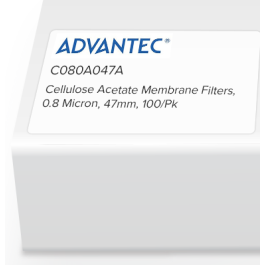
Filtros de membrana de disco de acetato de celulosa
 https://www.cotecno.cl/shop/filtros-de-membrana-de-disco-de-acetato-de-celulosa-629405
https://www.cotecno.cl/web/image/product.template/629405/image_1920?unique=b08cd67
https://www.cotecno.cl/shop/filtros-de-membrana-de-disco-de-acetato-de-celulosa-629405
https://www.cotecno.cl/web/image/product.template/629405/image_1920?unique=b08cd67
Documentos
Descripción general
Cellulose Acetate Membrane Filtros de disco
Our cellulose acetate membrane filters provide superior throughput and reduce the need for filter changes; effectively decreasing both cost and process times. The hydrophilic nature and durable physio-chemical properties of these membranes support a wide range of samples and applications, including: proteinaceous solutions, rigorous or automated processes, and thermal/pressure intensive conditions. These filters are produced from an exclusive impregnation process, ensuring pore-size and material uniformity for consistent flow rates, analytical precision, and repeatable results. Additionally, our cellulose acetate membranes are completely uncompromised up to 135°C (275°F), retaining dimensional strength throughout both autoclave and steam sterilization.
We provide the filters and technical support to help you take your breakthrough product from an idea to a prototype, to commercial scale.
Preguntas frecuentes
The pores of microporous membrane filters act as small capillaries. When hydrophilic membranes come into contact with water, capillary action associated with surface tension forces causes the water to spontaneously enter and fill the pores. In this manner, the membranes are easily wetted and allow the bulk flow of water through the pores. Once wetted, hydrophilic membranes will not allow the bulk flow of air or other gasses, unless they are applied at pressures greater than the membrane’s bubble point.
Hydrophilic membrane filters are typically used with water and aqueous solutions. They can also be used with compatible non-aqueous fluids. Hydrophilic membrane filters are typically not used for air, gas or vent filtration since the filters would block flow if inadvertently wetted, by condensation for example.
When hydrophobic membranes come into contact with water, surface tension forces act to repel the water from the pores. Water will not enter the pores and the membranes will act as a barrier to water flow, unless the water is applied at pressures greater than the membrane’s water entry pressure. Low surface tension fluids, such as alcohols, can spontaneously enter and fill the pores of hydrophobic membranes. Once all the air in the pores is displaced, there are no longer any surface tension forces and water can easily enter the pores, displace the low surface tension fluid, and pass through the membrane. The membrane will then allow bulk flow of water for as long as the pore remain water filled. If the membrane is allowed to dry (i.e. air enters the pores), then it must be pre-wet with a low surface tension fluid again prior to use with water.
Hydrophobic membrane filters are typically used with compatible non-aqueous fluids. They are also commonly used as air, gas, or vent filters. Hydrophobic membrane filters are sometimes used with water or aqueous solutions; and, in these applications, they must first be prewet with a low surface tension, water miscible fluid prior to use.
Sterlitech Cellulose Acetate (CA) membranes are made from cellulose diacetate. These membrane filters also have an integral nonwoven polyester (polyethylene terephthalate) support layer. When evaluating application compatibility, both materials should be considered.
The maximum operating temperatures for Sterlitech filter membranes are listed below.
- Sterlitech Silver Metal - 427°C
- Sterlitech Ceramic - 350°C
- Sterlitech Polycarbonate Track Etch - 140°C
- Sterlitech Polyester - 140°C
- Sterlitech Nitrocellulose (MCE) - 130°C
- Sterlitech Nylon - 180°C
- Sterlitech Polyethersulfone (PES) - *130°C
- Sterlitech Polypropylene - 82°C
- Sterlitech Cellulose Acetate - 135°C
- Sterlitech PTFE (Laminated) - 130°C
- Sterlitech PTFE (Unlaminated) - 260°C
- Sterlitech PVC Data not available
*5.0um and 8.0um - max temp is 180°C
Cellulose acetate (CA) membranes are made of entirely cellulose acetate polymer. These membrane filters have the lowest protein binding of the filer types in question and typically have the greatest throughput when used with proteinaceous solutions. They are also used in applications where maximum protein recovery is critical. The Sterlitech CA membranes have an integral nonwoven polyester support layer for improved strength and handling ease.
Ideally, nitrocellulose (NC) membranes would be made entirely of nitrocellulose polymer. However, almost all commercially available filtration grade membrane filters labeled as “nitrocellulose” are actually composed of membranes made with a mixture of nitrocellulose and cellulose acetate polymers. This is because pure nitrocellulose membrane filters are very difficult to manufacture with accpetable characteristics. In an effort to provide clarity to consumers, some manufactures refer to membranes containing a mixture of nitrocellulose and cellulose acetate polymers as mixed cellulose esters (MCE) membranes. In almost all applications, commercial nitrocellulose (NC) membrane filters and mixed cellulose esters (MCE) membrane filters are equivalent.
Mixed cellulose esters (MCE) membrane filters do not have a discrete support layer and are somewhat fragile and more difficult to handle
when compared to CA membrane filters. MCE membranes exhibit greater protein binding than CA membranes. However, MCE membranes tend to have more uniform pore structure and intrinsically greater clean water flow. MCE membrane filters have very good biocompatibility and are commonly used for microbiological studies. MCE filters are also traditionally used for silt density index (SDI) measurments.
Regenerated cellulose (RC) membranes are made by chemically treating nitrocellulose membranes so that the material reverts back to natural
cellulose. RC filters have the very good solvent resistance of traditional filter papers but with the much finer retention characteristics of polymer membrane filters. Additionally, regenerated cellulose is inherently hydrophilic and RC filters do not contain the wetting agents required by MCE and CA membrane filters.
Cellulose acetate (CA) and nitrocellulose (MCE) membranes will last 2 1/2 to 3 years before reverting to their natural hydrophobic states. Nylon, on the other hand, is naturally hydrophilic so it does not have a shelf life.
An easy test for older membranes is to perform a "wetting out" test. Dipping a small portion of the membrane into water (hydrophilic membranes) or an alcohol (hydrophobic membranes) works well. If the membrane absorbs the material, or "wets out", it has not gone past the shelf life.
Yes, the cellulose acetate (CA) membranes contain a proprietary surfactant. The surfactant is used to ensure the CA membrane filters have good wettability.
We have a Chemical Compatibility Chart that you can use for reference.
Nominal pore size ratings are provided as a general indication of filter retention. It is understood that some quantity of particles greater than, and equal to, the nominal pore size ratings will pass through the filters into the filtrate. Some manufactures may associate nominal pore size ratings with percentage filtration efficiencies. Nominal pore size ratings vary from manufacturer to manufacturer and, consequently, are not necessarily equivalent. Filters from different manufactures with similar nominal pore size ratings may not actually exhibit similar retention characteristics.
Absolute Tamaño de poro ratings are typically based on retention studies performed using challenge suspensions of standard microorganism cultures or particles of known size. Absolute Tamaño de poro ratings represent the size of the smallest microorganisms or particles completely retained during these studies. Absolute Tamaño de poro ratings are almost always correlated to bubble point Especificaciones that are used for quality control during membrane manufacturing. For the most part, absolute Tamaño de poro ratings, especially those based on microbial retention, are comparable from manufacturer to manufacturer. There is more uncertainty for absolute Tamaño de poro ratings based on particle retention studies, especially for Tamaño de poro ratings <0.2µm, since there are no standard methods for these studies.
Regardless of pore size ratings, it is important to understand that application conditions do influence particle retention. Even filters with absolute pore size ratings can be operated in conditions that will allow unexpectedly sized particles to pass.
Not including the polyester support layer, the Cellulose Acetate (CA) Filtros de membrana are composed entirely of cellulose acetate polymer. There may, however, still be a small amount of residual lignin present.
The Tamaño de poro refers to the diameter of the individual pores in a Filtro de membrana. Tamaño de poro is typically specified in micrometers (µm). Most membranes and filter media actually contain a distribution of pore sizes. Nominal Tamaño de poro ratings typically refer to the predominant Tamaño de poro of a filtration media; pores larger and smaller than the nominal rating may be present. Absolute Tamaño de poro ratings typically refer to the largest Tamaño de poro of a membrane and it is expected that all pores will be equal to or smaller than the absolute rating.
For the polycarbonate track-etch (PCTE) and polyester track-etch (PETE) Filtros de membrana, porosity is the percent of the total surface area occupied by the pores; it typically ranges from <1% to 16%. For the other Filtros de membrana, porosity is the percent of the total volume occupied by the pores; it typically ranges from 40 to 80%.
| Especificación |
0.2 - 5.0 µm · 13 - 47 mm · pack 10
|
0.22 µm · 13 mm · pack 100
|
0.22 µm · 142 mm · pack 25
|
0.22 µm · 200 x 200 · pack 5
|
0.22 µm · 25 mm · pack 100
|
0.22 µm · 293 mm · pack 25
|
0.22 µm · 300 x 3000 · pack 1
|
0.22 µm · 37 mm · pack 100
|
0.22 µm · 47 mm · pack 100
|
0.22 µm · 90 mm · pack 25
|
0.45 µm · 13 mm · pack 100
|
0.45 µm · 142 mm · pack 25
|
0.45 µm · 25 mm · pack 100
|
0.45 µm · 293 mm · pack 25
|
0.45 µm · 330 x 3000 · pack 1
|
0.45 µm · 37 mm · pack 100
|
0.45 µm · 47 mm · pack 100 · C045G047A
|
0.45 µm · 47 mm · pack 100 · CA04547100
|
0.45 µm · 90 mm · pack 25
|
0.65 µm · 13 mm · pack 100
|
0.65 µm · 25 mm · pack 100
|
0.65 µm · 47 mm · pack 100
|
0.65 µm · 90 mm · pack 25
|
0.8 µm · 13 mm · pack 100
|
0.8 µm · 142 mm · pack 25
|
0.8 µm · 25 mm · pack 100
|
0.8 µm · 293 mm · pack 25
|
0.8 µm · 300 x 3000 · pack 1
|
0.8 µm · 37 mm · pack 100
|
0.8 µm · 47 mm · pack 100
|
0.8 µm · 90 mm · pack 25
|
1.2 µm · 142 mm · pack 25
|
1.2 µm · 25 mm · pack 100
|
1.2 µm · 254 x 3000 · pack 1
|
1.2 µm · 293 mm · pack 25
|
1.2 µm · 47 mm · pack 100
|
1.2 µm · 90 mm · pack 25
|
3 µm · 13 mm · pack 100
|
3 µm · 142 mm · pack 25
|
3 µm · 25 mm · pack 100
|
3 µm · 47 mm · pack 100
|
3 µm · 90 mm · pack 25
|
5 µm · 142 mm · pack 25
|
5 µm · 25 mm · pack 100
|
5 µm · 47 mm · pack 100
|
5 µm · 90 mm · pack 25
|
|---|---|---|---|---|---|---|---|---|---|---|---|---|---|---|---|---|---|---|---|---|---|---|---|---|---|---|---|---|---|---|---|---|---|---|---|---|---|---|---|---|---|---|---|---|---|---|
| Tamano de poro | 0.2 - 5.0 | 0.22 | 0.22 | 0.22 | 0.22 | 0.22 | 0.22 | 0.22 | 0.22 | 0.22 | 0.45 | 0.45 | 0.45 | 0.45 | 0.45 | 0.45 | 0.45 | 0.45 | 0.45 | 0.65 | 0.65 | 0.65 | 0.65 | 0.8 | 0.8 | 0.8 | 0.8 | 0.8 | 0.8 | 0.8 | 0.8 | 1.2 | 1.2 | 1.2 | 1.2 | 1.2 | 1.2 | 3 | 3 | 3 | 3 | 3 | 5 | 5 | 5 | 5 |
| Tamano de paquete | 10 | 100 | 25 | 5 | 100 | 25 | 1 | 100 | 100 | 25 | 100 | 25 | 100 | 25 | 1 | 100 | 100 | 100 | 25 | 100 | 100 | 100 | 25 | 100 | 25 | 100 | 25 | 1 | 100 | 100 | 25 | 25 | 100 | 1 | 25 | 100 | 25 | 100 | 25 | 100 | 100 | 25 | 25 | 100 | 100 | 25 |
| Diametro (mm) | 13 - 47 | 13 | 142 | — | 25 | 293 | — | 37 | 47 | 90 | 13 | 142 | 25 | 293 | — | 37 | 47 | 47 | 90 | 13 | 25 | 47 | 90 | 13 | 142 | 25 | 293 | — | 37 | 47 | 90 | 142 | 25 | — | 293 | 47 | 90 | 13 | 142 | 25 | 47 | 90 | 142 | 25 | 47 | 90 |
| Tamano de hoja | — | — | — | 200 x 200 | — | — | 300 x 3000 | — | — | — | — | — | — | — | 330 x 3000 | — | — | — | — | — | — | — | — | — | — | — | — | 300 x 3000 | — | — | — | — | — | 254 x 3000 | — | — | — | — | — | — | — | — | — | — | — | — |
| Material | — | Cellulose Acetate | Cellulose Acetate | Cellulose Acetate | Cellulose Acetate | Cellulose Acetate | Cellulose Acetate | Cellulose Acetate | Cellulose Acetate | Cellulose Acetate | Cellulose Acetate | Cellulose Acetate | Cellulose Acetate | Cellulose Acetate | Cellulose Acetate | Cellulose Acetate | — | Cellulose Acetate | Cellulose Acetate | Cellulose Acetate | Cellulose Acetate | Cellulose Acetate | Cellulose Acetate | Cellulose Acetate | Cellulose Acetate | Cellulose Acetate | Cellulose Acetate | — | Cellulose Acetate | Cellulose Acetate | Cellulose Acetate | Cellulose Acetate | Cellulose Acetate | — | Cellulose Acetate | Cellulose Acetate | — | Cellulose Acetate | Cellulose Acetate | Cellulose Acetate | Cellulose Acetate | Cellulose Acetate | — | Cellulose Acetate | Cellulose Acetate | Cellulose Acetate |
| Esterilizacion | Gamma Irradiation, EtO, Autoclave | Gamma Irradiation, EtO, Autoclave | Gamma Irradiation, EtO, Autoclave | Gamma Irradiation, EtO, Autoclave | Gamma Irradiation, EtO, Autoclave | Gamma Irradiation, EtO, Autoclave | Gamma Irradiation, EtO, Autoclave | Gamma Irradiation, EtO, Autoclave | Gamma Irradiation, EtO, Autoclave | Gamma Irradiation, EtO, Autoclave | Gamma Irradiation, EtO, Autoclave | Gamma Irradiation, EtO, Autoclave | Gamma Irradiation, EtO, Autoclave | Gamma Irradiation, EtO, Autoclave | Gamma Irradiation, EtO, Autoclave | Gamma Irradiation, EtO, Autoclave | Gamma Irradiation, EtO, Autoclave | Gamma Irradiation, EtO, Autoclave | Gamma Irradiation, EtO, Autoclave | Gamma Irradiation, EtO, Autoclave | Gamma Irradiation, EtO, Autoclave | Gamma Irradiation, EtO, Autoclave | Gamma Irradiation, EtO, Autoclave | Gamma Irradiation, EtO, Autoclave | Gamma Irradiation, EtO, Autoclave | Gamma Irradiation, EtO, Autoclave | Gamma Irradiation, EtO, Autoclave | Gamma Irradiation, EtO, Autoclave | Gamma Irradiation, EtO, Autoclave | Gamma Irradiation, EtO, Autoclave | Gamma Irradiation, EtO, Autoclave | Gamma Irradiation, EtO, Autoclave | Gamma Irradiation, EtO, Autoclave | Gamma Irradiation, EtO, Autoclave | Gamma Irradiation, EtO, Autoclave | Gamma Irradiation, EtO, Autoclave | Gamma Irradiation, EtO, Autoclave | Gamma Irradiation, EtO, Autoclave | Gamma Irradiation, EtO, Autoclave | Gamma Irradiation, EtO, Autoclave | Gamma Irradiation, EtO, Autoclave | Gamma Irradiation, EtO, Autoclave | Gamma Irradiation, EtO, Autoclave | Gamma Irradiation, EtO, Autoclave | Gamma Irradiation, EtO, Autoclave | Gamma Irradiation, EtO, Autoclave |
| Ensayo USP clase VI | Passed | Passed | Passed | Passed | Passed | Passed | Passed | Passed | Passed | Passed | Passed | Passed | Passed | Passed | Passed | Passed | Passed | Passed | Passed | Passed | Passed | Passed | Passed | Passed | Passed | Passed | Passed | Passed | Passed | Passed | Passed | Passed | Passed | Passed | Passed | Passed | Passed | Passed | Passed | Passed | Passed | Passed | Passed | Passed | Passed | Passed |
| Union proteica BSA | 3.8 µg/cm^2 | 3.8 µg/cm^2 | 3.8 µg/cm^2 | 3.8 µg/cm^2 | 3.8 µg/cm^2 | 3.8 µg/cm^2 | 3.8 µg/cm^2 | 3.8 µg/cm^2 | 3.8 µg/cm^2 | 3.8 µg/cm^2 | 3.8 µg/cm^2 | 3.8 µg/cm^2 | 3.8 µg/cm^2 | 3.8 µg/cm^2 | 3.8 µg/cm^2 | 3.8 µg/cm^2 | 3.8 µg/cm^2 | 3.8 µg/cm^2 | 3.8 µg/cm^2 | 3.8 µg/cm^2 | 3.8 µg/cm^2 | 3.8 µg/cm^2 | 3.8 µg/cm^2 | 3.8 µg/cm^2 | 3.8 µg/cm^2 | 3.8 µg/cm^2 | 3.8 µg/cm^2 | 3.8 µg/cm^2 | 3.8 µg/cm^2 | 3.8 µg/cm^2 | 3.8 µg/cm^2 | 3.8 µg/cm^2 | 3.8 µg/cm^2 | 3.8 µg/cm^2 | 3.8 µg/cm^2 | 3.8 µg/cm^2 | 3.8 µg/cm^2 | 3.8 µg/cm^2 | 3.8 µg/cm^2 | 3.8 µg/cm^2 | 3.8 µg/cm^2 | 3.8 µg/cm^2 | 3.8 µg/cm^2 | 3.8 µg/cm^2 | 3.8 µg/cm^2 | 3.8 µg/cm^2 |
| Temperatura maxima de operacion | 135 °C (275 °F) | 135 °C (275 °F) | 135 °C (275 °F) | 135 °C (275 °F) | 135 °C (275 °F) | 135 °C (275 °F) | 135 °C (275 °F) | 135 °C (275 °F) | 135 °C (275 °F) | 135 °C (275 °F) | 135 °C (275 °F) | 135 °C (275 °F) | 135 °C (275 °F) | 135 °C (275 °F) | 135 °C (275 °F) | 135 °C (275 °F) | 135 °C (275 °F) | 135 °C (275 °F) | 135 °C (275 °F) | 135 °C (275 °F) | 135 °C (275 °F) | 135 °C (275 °F) | 135 °C (275 °F) | 135 °C (275 °F) | 135 °C (275 °F) | 135 °C (275 °F) | 135 °C (275 °F) | 135 °C (275 °F) | 135 °C (275 °F) | 135 °C (275 °F) | 135 °C (275 °F) | 135 °C (275 °F) | 135 °C (275 °F) | 135 °C (275 °F) | 135 °C (275 °F) | 135 °C (275 °F) | 135 °C (275 °F) | 135 °C (275 °F) | 135 °C (275 °F) | 135 °C (275 °F) | 135 °C (275 °F) | 135 °C (275 °F) | 135 °C (275 °F) | 135 °C (275 °F) | 135 °C (275 °F) | 135 °C (275 °F) |
| Espesor | — | 65-110 µm | 65-110 µm | 65-110 µm | 65-110 µm | 65-110 µm | 65-110 µm | 65-110 µm | 65-110 µm | 65-110 µm | 65-110 µm | 65-110 µm | 65-110 µm | 65-110 µm | 65-110 µm | 65-110 µm | 65-110 µm | 65-110 µm | 65-110 µm | 65-110 µm | 65-110 µm | 65-110 µm | 65-110 µm | 65-110 µm | 65-110 µm | 65-110 µm | 65-110 µm | 65-110 µm | 65-110 µm | 65-110 µm | 65-110 µm | 65-110 µm | 65-110 µm | 65-110 µm | 65-110 µm | 65-110 µm | 65-110 µm | 135 µm | 135 µm | 135 µm | 135 µm | 135 µm | 65-110 µm | 65-110 µm | 65-110 µm | 65-110 µm |
| Caudal | — | 16.1 | 16.1 | 16.1 | 16.1 | 16.1 | 16.1 | 16.1 | 16.1 | 16.1 | 54.7 | 54.7 | 54.7 | 54.7 | 54.7 | 54.7 | 54.7 | 54.7 | 54.7 | 70.9 | 70.9 | 70.9 | 70.9 | 81.3 | 81.3 | 81.3 | 81.3 | 81.3 | 81.3 | 81.3 | 81.3 | 180 | 180 | 180 | 180 | 180 | 180 | 500 | 500 | 500 | 500 | 500 | 375 | 375 | 375 | 375 |
| Punto de burbuja | — | 50 psi | 50 psi | 50 psi | 50 psi | 50 psi | 50 psi | 50 psi | 50 psi | 50 psi | > 30 psi | > 30 psi | > 30 psi | > 30 psi | > 30 psi | > 30 psi | > 30 psi | > 30 psi | > 30 psi | 18 psi | 18 psi | 18 psi | 18 psi | 14 psi | 14 psi | 14 psi | 14 psi | 14 psi | 14 psi | 14 psi | 14 psi | 11 psi | 11 psi | 11 psi | 11 psi | 11 psi | 11 psi | 5 psi | 5 psi | 5 psi | 5 psi | 5 psi | 6 psi | 6 psi | 6 psi | 6 psi |
| Tipo de material | — | Plain | Plain | Plain | Plain | Plain | Plain | Plain | Plain | Plain | Plain | Plain | Plain | Plain | Plain | Plain | — | Plain | Plain | Plain | Plain | Plain | Plain | Plain | Plain | Plain | Plain | — | Plain | Plain | Plain | Plain | Plain | — | Plain | Plain | — | Plain | Plain | Plain | Plain | Plain | — | Plain | Plain | Plain |
| Variante | Tamano de poro | Tamano de paquete | Diametro (mm) | Tamano de hoja | Material | Esterilizacion | Ensayo USP clase VI | Union proteica BSA | Temperatura maxima de operacion | Espesor | Caudal | Punto de burbuja | Tipo de material |
|---|---|---|---|---|---|---|---|---|---|---|---|---|---|
|
0.2 - 5.0 µm · 13 - 47 mm · pack 10
|
0.2 - 5.0 | 10 | 13 - 47 | — | — | Gamma Irradiation, EtO, Autoclave | Passed | 3.8 µg/cm^2 | 135 °C (275 °F) | — | — | — | — |
|
0.22 µm · 13 mm · pack 100
|
0.22 | 100 | 13 | — | Cellulose Acetate | Gamma Irradiation, EtO, Autoclave | Passed | 3.8 µg/cm^2 | 135 °C (275 °F) | 65-110 µm | 16.1 | 50 psi | Plain |
|
0.22 µm · 142 mm · pack 25
|
0.22 | 25 | 142 | — | Cellulose Acetate | Gamma Irradiation, EtO, Autoclave | Passed | 3.8 µg/cm^2 | 135 °C (275 °F) | 65-110 µm | 16.1 | 50 psi | Plain |
|
0.22 µm · 200 x 200 · pack 5
|
0.22 | 5 | — | 200 x 200 | Cellulose Acetate | Gamma Irradiation, EtO, Autoclave | Passed | 3.8 µg/cm^2 | 135 °C (275 °F) | 65-110 µm | 16.1 | 50 psi | Plain |
|
0.22 µm · 25 mm · pack 100
|
0.22 | 100 | 25 | — | Cellulose Acetate | Gamma Irradiation, EtO, Autoclave | Passed | 3.8 µg/cm^2 | 135 °C (275 °F) | 65-110 µm | 16.1 | 50 psi | Plain |
|
0.22 µm · 293 mm · pack 25
|
0.22 | 25 | 293 | — | Cellulose Acetate | Gamma Irradiation, EtO, Autoclave | Passed | 3.8 µg/cm^2 | 135 °C (275 °F) | 65-110 µm | 16.1 | 50 psi | Plain |
|
0.22 µm · 300 x 3000 · pack 1
|
0.22 | 1 | — | 300 x 3000 | Cellulose Acetate | Gamma Irradiation, EtO, Autoclave | Passed | 3.8 µg/cm^2 | 135 °C (275 °F) | 65-110 µm | 16.1 | 50 psi | Plain |
|
0.22 µm · 37 mm · pack 100
|
0.22 | 100 | 37 | — | Cellulose Acetate | Gamma Irradiation, EtO, Autoclave | Passed | 3.8 µg/cm^2 | 135 °C (275 °F) | 65-110 µm | 16.1 | 50 psi | Plain |
|
0.22 µm · 47 mm · pack 100
|
0.22 | 100 | 47 | — | Cellulose Acetate | Gamma Irradiation, EtO, Autoclave | Passed | 3.8 µg/cm^2 | 135 °C (275 °F) | 65-110 µm | 16.1 | 50 psi | Plain |
|
0.22 µm · 90 mm · pack 25
|
0.22 | 25 | 90 | — | Cellulose Acetate | Gamma Irradiation, EtO, Autoclave | Passed | 3.8 µg/cm^2 | 135 °C (275 °F) | 65-110 µm | 16.1 | 50 psi | Plain |
|
0.45 µm · 13 mm · pack 100
|
0.45 | 100 | 13 | — | Cellulose Acetate | Gamma Irradiation, EtO, Autoclave | Passed | 3.8 µg/cm^2 | 135 °C (275 °F) | 65-110 µm | 54.7 | > 30 psi | Plain |
|
0.45 µm · 142 mm · pack 25
|
0.45 | 25 | 142 | — | Cellulose Acetate | Gamma Irradiation, EtO, Autoclave | Passed | 3.8 µg/cm^2 | 135 °C (275 °F) | 65-110 µm | 54.7 | > 30 psi | Plain |
|
0.45 µm · 25 mm · pack 100
|
0.45 | 100 | 25 | — | Cellulose Acetate | Gamma Irradiation, EtO, Autoclave | Passed | 3.8 µg/cm^2 | 135 °C (275 °F) | 65-110 µm | 54.7 | > 30 psi | Plain |
|
0.45 µm · 293 mm · pack 25
|
0.45 | 25 | 293 | — | Cellulose Acetate | Gamma Irradiation, EtO, Autoclave | Passed | 3.8 µg/cm^2 | 135 °C (275 °F) | 65-110 µm | 54.7 | > 30 psi | Plain |
|
0.45 µm · 330 x 3000 · pack 1
|
0.45 | 1 | — | 330 x 3000 | Cellulose Acetate | Gamma Irradiation, EtO, Autoclave | Passed | 3.8 µg/cm^2 | 135 °C (275 °F) | 65-110 µm | 54.7 | > 30 psi | Plain |
|
0.45 µm · 37 mm · pack 100
|
0.45 | 100 | 37 | — | Cellulose Acetate | Gamma Irradiation, EtO, Autoclave | Passed | 3.8 µg/cm^2 | 135 °C (275 °F) | 65-110 µm | 54.7 | > 30 psi | Plain |
|
0.45 µm · 47 mm · pack 100 · C045G047A
|
0.45 | 100 | 47 | — | — | Gamma Irradiation, EtO, Autoclave | Passed | 3.8 µg/cm^2 | 135 °C (275 °F) | 65-110 µm | 54.7 | > 30 psi | — |
|
0.45 µm · 47 mm · pack 100 · CA04547100
|
0.45 | 100 | 47 | — | Cellulose Acetate | Gamma Irradiation, EtO, Autoclave | Passed | 3.8 µg/cm^2 | 135 °C (275 °F) | 65-110 µm | 54.7 | > 30 psi | Plain |
|
0.45 µm · 90 mm · pack 25
|
0.45 | 25 | 90 | — | Cellulose Acetate | Gamma Irradiation, EtO, Autoclave | Passed | 3.8 µg/cm^2 | 135 °C (275 °F) | 65-110 µm | 54.7 | > 30 psi | Plain |
|
0.65 µm · 13 mm · pack 100
|
0.65 | 100 | 13 | — | Cellulose Acetate | Gamma Irradiation, EtO, Autoclave | Passed | 3.8 µg/cm^2 | 135 °C (275 °F) | 65-110 µm | 70.9 | 18 psi | Plain |
|
0.65 µm · 25 mm · pack 100
|
0.65 | 100 | 25 | — | Cellulose Acetate | Gamma Irradiation, EtO, Autoclave | Passed | 3.8 µg/cm^2 | 135 °C (275 °F) | 65-110 µm | 70.9 | 18 psi | Plain |
|
0.65 µm · 47 mm · pack 100
|
0.65 | 100 | 47 | — | Cellulose Acetate | Gamma Irradiation, EtO, Autoclave | Passed | 3.8 µg/cm^2 | 135 °C (275 °F) | 65-110 µm | 70.9 | 18 psi | Plain |
|
0.65 µm · 90 mm · pack 25
|
0.65 | 25 | 90 | — | Cellulose Acetate | Gamma Irradiation, EtO, Autoclave | Passed | 3.8 µg/cm^2 | 135 °C (275 °F) | 65-110 µm | 70.9 | 18 psi | Plain |
|
0.8 µm · 13 mm · pack 100
|
0.8 | 100 | 13 | — | Cellulose Acetate | Gamma Irradiation, EtO, Autoclave | Passed | 3.8 µg/cm^2 | 135 °C (275 °F) | 65-110 µm | 81.3 | 14 psi | Plain |
|
0.8 µm · 142 mm · pack 25
|
0.8 | 25 | 142 | — | Cellulose Acetate | Gamma Irradiation, EtO, Autoclave | Passed | 3.8 µg/cm^2 | 135 °C (275 °F) | 65-110 µm | 81.3 | 14 psi | Plain |
|
0.8 µm · 25 mm · pack 100
|
0.8 | 100 | 25 | — | Cellulose Acetate | Gamma Irradiation, EtO, Autoclave | Passed | 3.8 µg/cm^2 | 135 °C (275 °F) | 65-110 µm | 81.3 | 14 psi | Plain |
|
0.8 µm · 293 mm · pack 25
|
0.8 | 25 | 293 | — | Cellulose Acetate | Gamma Irradiation, EtO, Autoclave | Passed | 3.8 µg/cm^2 | 135 °C (275 °F) | 65-110 µm | 81.3 | 14 psi | Plain |
|
0.8 µm · 300 x 3000 · pack 1
|
0.8 | 1 | — | 300 x 3000 | — | Gamma Irradiation, EtO, Autoclave | Passed | 3.8 µg/cm^2 | 135 °C (275 °F) | 65-110 µm | 81.3 | 14 psi | — |
|
0.8 µm · 37 mm · pack 100
|
0.8 | 100 | 37 | — | Cellulose Acetate | Gamma Irradiation, EtO, Autoclave | Passed | 3.8 µg/cm^2 | 135 °C (275 °F) | 65-110 µm | 81.3 | 14 psi | Plain |
|
0.8 µm · 47 mm · pack 100
|
0.8 | 100 | 47 | — | Cellulose Acetate | Gamma Irradiation, EtO, Autoclave | Passed | 3.8 µg/cm^2 | 135 °C (275 °F) | 65-110 µm | 81.3 | 14 psi | Plain |
|
0.8 µm · 90 mm · pack 25
|
0.8 | 25 | 90 | — | Cellulose Acetate | Gamma Irradiation, EtO, Autoclave | Passed | 3.8 µg/cm^2 | 135 °C (275 °F) | 65-110 µm | 81.3 | 14 psi | Plain |
|
1.2 µm · 142 mm · pack 25
|
1.2 | 25 | 142 | — | Cellulose Acetate | Gamma Irradiation, EtO, Autoclave | Passed | 3.8 µg/cm^2 | 135 °C (275 °F) | 65-110 µm | 180 | 11 psi | Plain |
|
1.2 µm · 25 mm · pack 100
|
1.2 | 100 | 25 | — | Cellulose Acetate | Gamma Irradiation, EtO, Autoclave | Passed | 3.8 µg/cm^2 | 135 °C (275 °F) | 65-110 µm | 180 | 11 psi | Plain |
|
1.2 µm · 254 x 3000 · pack 1
|
1.2 | 1 | — | 254 x 3000 | — | Gamma Irradiation, EtO, Autoclave | Passed | 3.8 µg/cm^2 | 135 °C (275 °F) | 65-110 µm | 180 | 11 psi | — |
|
1.2 µm · 293 mm · pack 25
|
1.2 | 25 | 293 | — | Cellulose Acetate | Gamma Irradiation, EtO, Autoclave | Passed | 3.8 µg/cm^2 | 135 °C (275 °F) | 65-110 µm | 180 | 11 psi | Plain |
|
1.2 µm · 47 mm · pack 100
|
1.2 | 100 | 47 | — | Cellulose Acetate | Gamma Irradiation, EtO, Autoclave | Passed | 3.8 µg/cm^2 | 135 °C (275 °F) | 65-110 µm | 180 | 11 psi | Plain |
|
1.2 µm · 90 mm · pack 25
|
1.2 | 25 | 90 | — | — | Gamma Irradiation, EtO, Autoclave | Passed | 3.8 µg/cm^2 | 135 °C (275 °F) | 65-110 µm | 180 | 11 psi | — |
|
3 µm · 13 mm · pack 100
|
3 | 100 | 13 | — | Cellulose Acetate | Gamma Irradiation, EtO, Autoclave | Passed | 3.8 µg/cm^2 | 135 °C (275 °F) | 135 µm | 500 | 5 psi | Plain |
|
3 µm · 142 mm · pack 25
|
3 | 25 | 142 | — | Cellulose Acetate | Gamma Irradiation, EtO, Autoclave | Passed | 3.8 µg/cm^2 | 135 °C (275 °F) | 135 µm | 500 | 5 psi | Plain |
|
3 µm · 25 mm · pack 100
|
3 | 100 | 25 | — | Cellulose Acetate | Gamma Irradiation, EtO, Autoclave | Passed | 3.8 µg/cm^2 | 135 °C (275 °F) | 135 µm | 500 | 5 psi | Plain |
|
3 µm · 47 mm · pack 100
|
3 | 100 | 47 | — | Cellulose Acetate | Gamma Irradiation, EtO, Autoclave | Passed | 3.8 µg/cm^2 | 135 °C (275 °F) | 135 µm | 500 | 5 psi | Plain |
|
3 µm · 90 mm · pack 25
|
3 | 25 | 90 | — | Cellulose Acetate | Gamma Irradiation, EtO, Autoclave | Passed | 3.8 µg/cm^2 | 135 °C (275 °F) | 135 µm | 500 | 5 psi | Plain |
|
5 µm · 142 mm · pack 25
|
5 | 25 | 142 | — | — | Gamma Irradiation, EtO, Autoclave | Passed | 3.8 µg/cm^2 | 135 °C (275 °F) | 65-110 µm | 375 | 6 psi | — |
|
5 µm · 25 mm · pack 100
|
5 | 100 | 25 | — | Cellulose Acetate | Gamma Irradiation, EtO, Autoclave | Passed | 3.8 µg/cm^2 | 135 °C (275 °F) | 65-110 µm | 375 | 6 psi | Plain |
|
5 µm · 47 mm · pack 100
|
5 | 100 | 47 | — | Cellulose Acetate | Gamma Irradiation, EtO, Autoclave | Passed | 3.8 µg/cm^2 | 135 °C (275 °F) | 65-110 µm | 375 | 6 psi | Plain |
|
5 µm · 90 mm · pack 25
|
5 | 25 | 90 | — | Cellulose Acetate | Gamma Irradiation, EtO, Autoclave | Passed | 3.8 µg/cm^2 | 135 °C (275 °F) | 65-110 µm | 375 | 6 psi | Plain |